
Cataract Surgery
Patient-Focused
Serving the Western New York community since 1990
The first privately owned multi-specialty surgery Center in Western New York
Accredited By
Accreditation Association for Ambulatory Health Care, Inc
What is a cataract?
A cataract occurs when the eye’s natural lens becomes cloudy, causing vision to become blurred, dim, or less clear. Cataracts typically develop gradually and become more common with age.
Symptoms may include blurred or cloudy vision, increased sensitivity to glare, difficulty seeing at night, halos around lights, faded colors, or frequent changes in eyeglass prescriptions.
During cataract surgery, the cloudy natural lens is removed and replaced with a clear artificial intraocular lens (IOL). The new lens is designed to restore clarity and improve the eye’s ability to focus.
Several types of intraocular lenses are available. Depending on your vision needs and the health of your eyes, your ophthalmologist will discuss the lens options that may be appropriate for you.

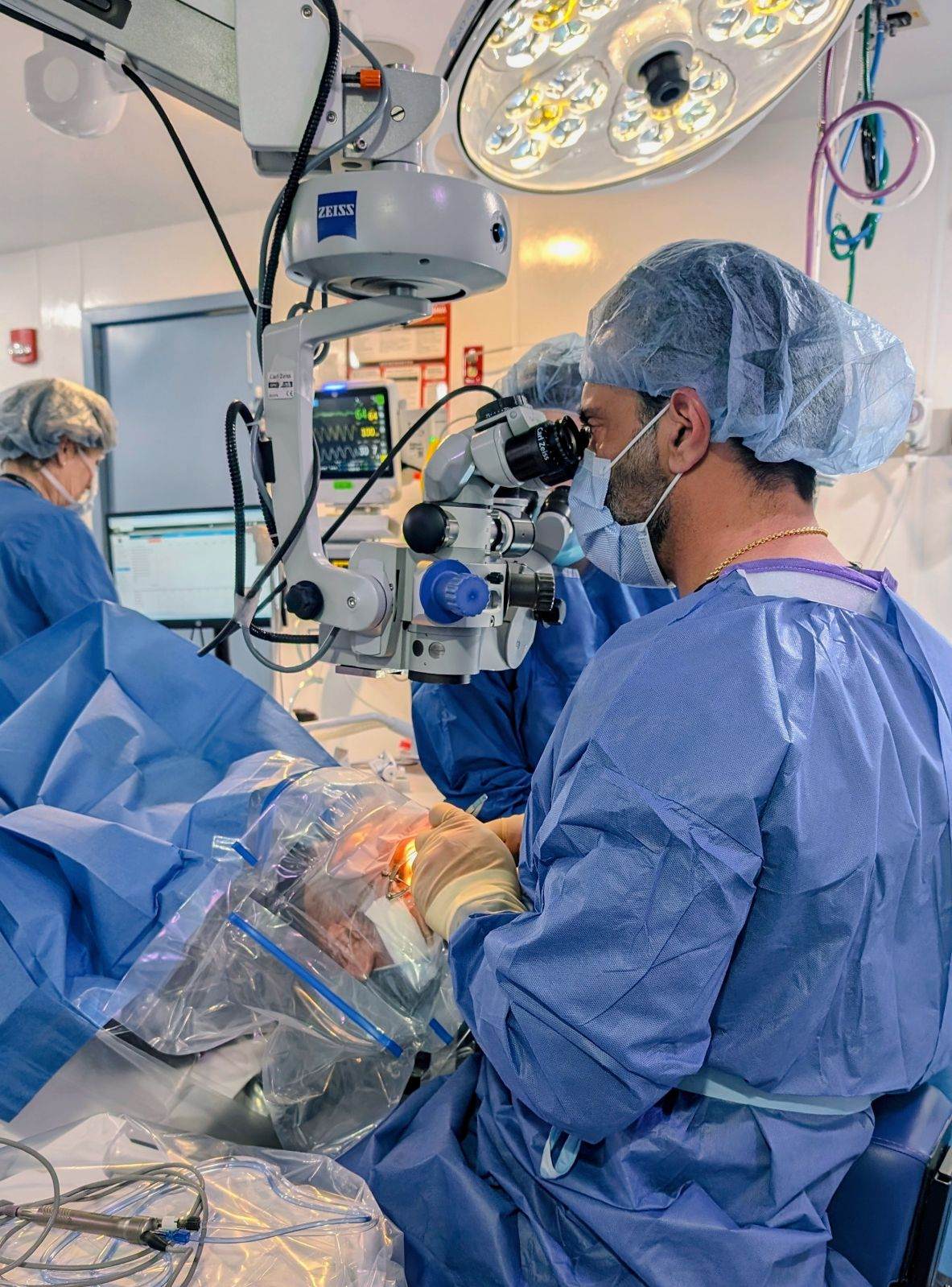
Laser-Assisted Cataract Surgery
Laser-assisted cataract surgery uses advanced femtosecond laser technology to perform certain steps of cataract surgery with a high degree of precision.
Depending on the patient’s individual treatment plan, the laser may be used to create precise incisions, open the lens capsule, and soften or fragment the cataract before it is removed. The laser may also be used to create corneal incisions designed to help reduce certain types of astigmatism.
Your ophthalmologist will determine whether laser-assisted cataract surgery is appropriate for your eyes and discuss the potential benefits and available options with you.
Advanced Technology Intraocular Lenses (ATIOLs)
Cataract surgery provides an opportunity not only to remove the cloudy natural lens but also to address certain vision needs through the selection of an intraocular lens.
Advanced Technology Intraocular Lenses (ATIOLs) are designed to provide additional vision correction beyond that of a traditional monofocal lens. Depending on the type of lens selected, an ATIOL may help correct astigmatism, provide a broader range of vision, or reduce dependence on glasses for certain activities.
Advanced lens options may include:
- Toric IOLs, which are designed to correct certain types of astigmatism.
- Multifocal or trifocal IOLs, which are designed to provide vision at multiple distances.
- Extended Depth of Focus (EDOF) IOLs, which are designed to provide an extended range of vision.
- Light Adjustable Lens (LAL), an advanced intraocular lens that allows the ophthalmologist to customize the lens power after cataract surgery.
- Other advanced lens technologies that may be appropriate based on a patient’s individual visual needs.
Not every patient is a candidate for every type of lens. Your ophthalmologist will evaluate the health of your eyes, lifestyle, visual goals, and other factors to help determine which lens option may be most appropriate for you.
No intraocular lens can guarantee complete freedom from glasses, and some patients may continue to need glasses for certain activities following cataract surgery.
Our team at Buffalo Ambulatory Surgery Center is committed to making your surgical experience as comfortable, safe, and efficient as possible while providing the high-quality ophthalmic care our patients have come to expect.
Our Commitment
For more than three decades, Buffalo Ambulatory Surgery Center has been committed to combining clinical excellence with compassionate, patient-centered care. As we continue to grow and expand our services, our focus remains the same: providing a safe, respectful, efficient, and exceptional surgical experience for every patient we serve.